

Free App Month!
You can save $20 if your student completes their application this month. We’re waiving the application fee in October!
Make Your Move!
You can save $20 if your student completes their application this month. We’re waiving the application fee in October!
Make Your Move!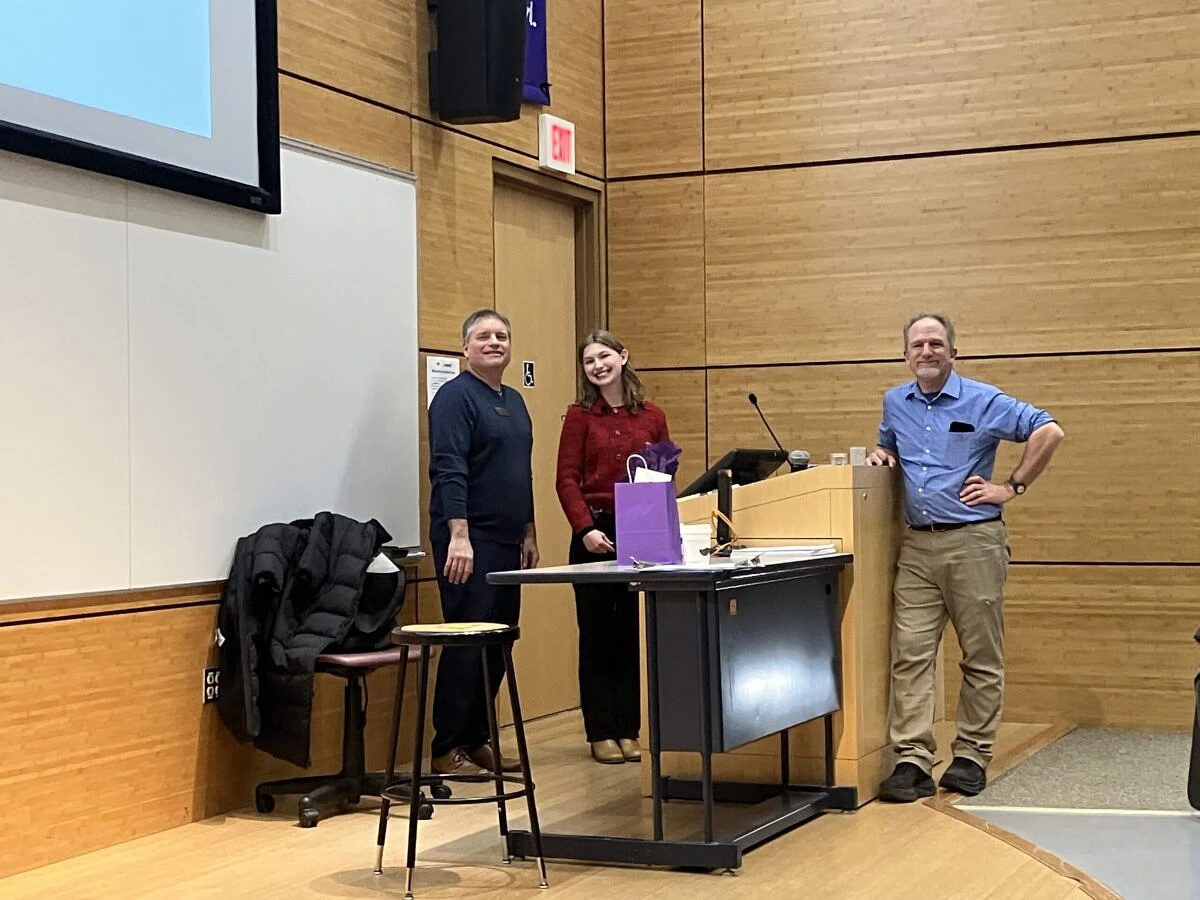

The Departments of Biology and Mathematics and Statistics recently welcomed a guest scholar for an interdisciplinary seminar exploring how mathematical tools can help scientists better understand and predict complex natural systems.
The seminar, titled “Bridging the Mathematical and Physical Sciences to Build Better Models,” featured Charlotte Moser, a Ph.D. student in the Department of Mathematics at University of Wisconsin–Madison. Adding a special connection to campus, Charlotte’s sister, Madeline Moser, is a Biology major at Winona State University and serves as a member of the COSE Dean’s Advisory Board.
Speaking to students and faculty, Charlotte addressed a central question: How can mathematics help us understand and predict complex systems from extreme weather events to the population dynamics of endangered species?
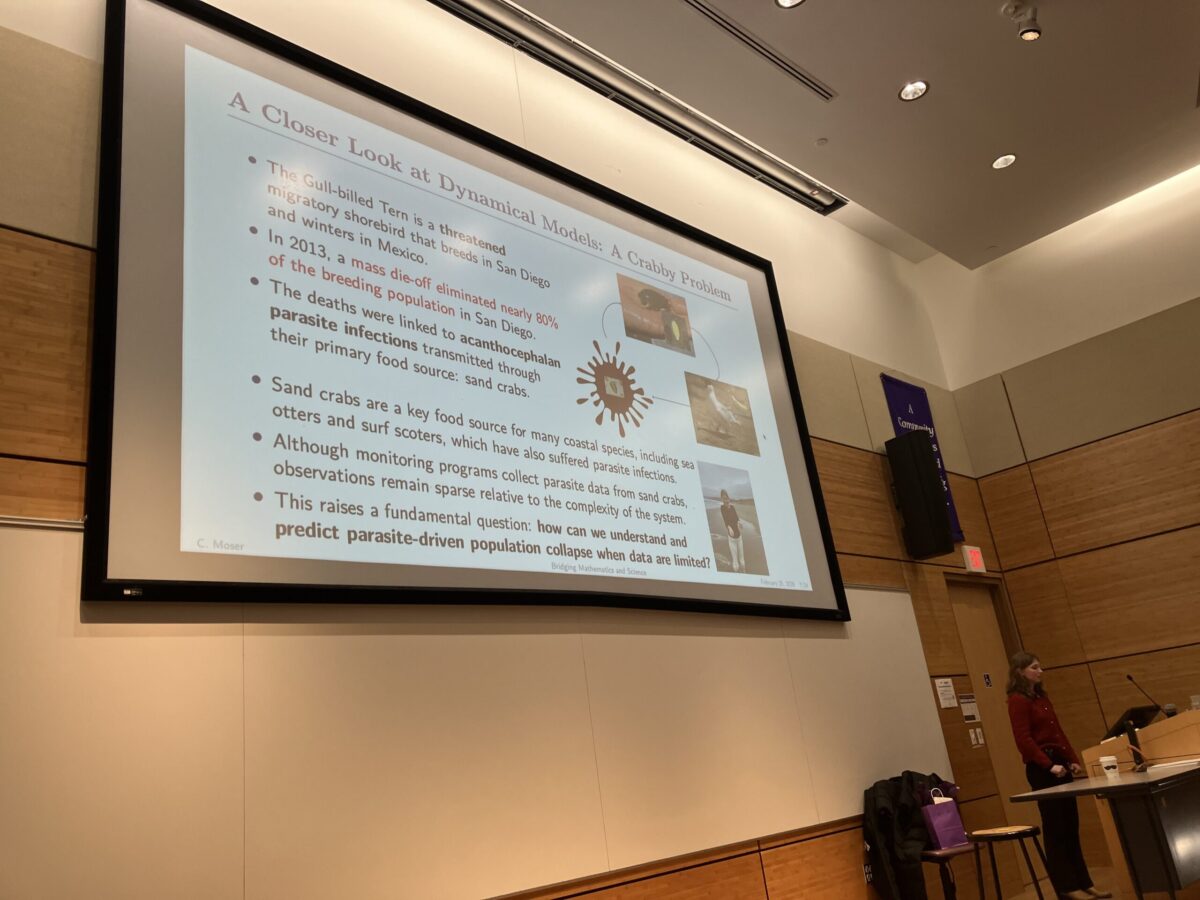
Her presentation emphasized that preparing for or preventing such events requires systematic, data-driven prediction through mathematical modeling. Charlotte explained that building effective models begins with a deep understanding of the underlying phenomena. Years of scientific study provide insight into the physical and statistical behavior of environmental and biological systems, which in turn guide the construction of predictive frameworks. Once developed, these models allow researchers to forecast potential outcomes and explore strategies to influence them.
Designed to be accessible across disciplines, the talk introduced key mathematical tools used in modern modeling, including differential equations, stochastic processes, machine learning techniques, and uncertainty quantification. Charlotte highlighted how these approaches are applied to real-world problems in both Earth science and biology, underscoring the growing importance of collaboration between mathematicians, statisticians, and scientists in other fields.
Need help? Feel free to contact us by phone or email using the information below.
Phone: 507-457-2800
Email: warriorhub@winona.edu